How geopolitics and international leadership has influenced the climate and clean-energy transition. The movement now runs on cost and security.
Since 1970, the price of oil has dramatically risen or fallen by more than 30% approximately once every four years. Eight times prices have spiked, and six times crashed. Each episode is typically blamed on a discrete crisis: a war, an embargo, a shock. But fourteen shocks in six decades is not a series of accidents. It is the normal operating condition of an unstable system.
By contrast, renewable energy and electric vehicles have often been characterized as “unreliable”. How do you generate power when the sun isn't shining or the wind isn't blowing? Coal, oil, and gas were cast as the steady, dependable sources. They are always on, or so the story goes. But the volatility of the oil-based system is once again creating conditions that may move us more quickly toward cleaner alternatives.
Oil Shocks
After sharp oil price increases, the world responds quickly. In the aftermath of the 2022 Russian invasion of Ukraine, Russian oil and gas exports were pushed out of European markets, but the impact reached farther. Pakistan, hit hard by the drastic increase in imported fuel costs, turned to an attractive, cheap alternative: Chinese solar. It has since imported more than 50 GW of solar capacity and pledged to meet 95% of all domestic power through renewable sources by 2040.
Before the recent U.S./Iran War, about a fifth of the world's oil passed through the Strait of Hormuz, a single channel roughly two miles wide. A similar share of seaborne liquefied natural gas moves through the gap. Even in an uncertain world, oil prices have so far stayed relatively contained and are well below the 2008 peak of about $147 a barrel, which would be roughly $225 in today's currency. To achieve stability and move prices back toward $100, the International Energy Agency had to release a third of its strategic reserves. Even after this action, the market is effectively betting the strait reopens soon. The U.S. has been largely insulated at the national level, but not so the average citizen. Gasoline is one of the most visible prices in American life and carries an influential political charge that can influence change.
"Even as U.S. policy decisions have recently undermined EVs and renewable energy, the conflict with Iran has handed the world the most recent incentive to revolutionize its energy and transportation sectors."
Electric Vehicles
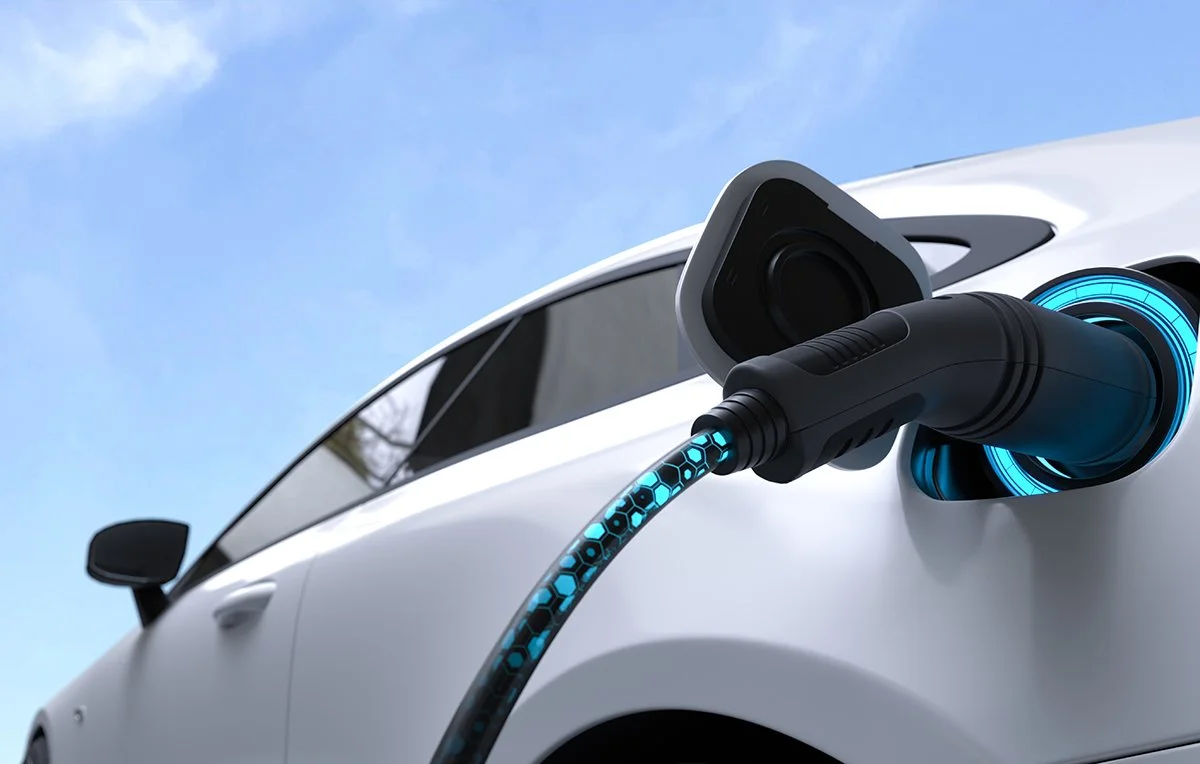
U.S. drivers have been feeling a version of what UK researchers named "pump anxiety", which is the unease about what the next fill-up will cost as prices climb. Gas peaked near $4.50 a gallon in May before coming down, and while one spike rarely changes a buying decision on its own, the case for staying tied to gasoline gets harder to make if prices remain higher than normal.
The willingness to switch to an EV is visible across the globe. In May 2026 Europe's sales reached a record: nearly one in four new cars sold were fully electric, with registrations up 34% over the same month in 2025. France, reaching 29% electric, framed it as a response to its energy insecurity and oil dependence. The U.S., by contrast, EVs are roughly 10% of total sales. This difference comes down to two things: price and policy.The most affordable EVs are made in China, whose vehicles face some of the steepest U.S. import barriers with a 100% tariff, a ban on Chinese vehicle software, and a recently cancelled Chinese battery-plant project. Further, EV tax credits ended in September 2025, and the IEA expects almost no federal support for EV purchases in 2026. U.S. EV sales in the last quarter of 2025 were 45% lower than a year earlier. Canada also cut its own EV rebate and saw its electric share fall from 17% to 11% over the same period. The shift globally runs on affordability and willingness alike. In the U.S., the willingness is there but price and policy are keeping electric vehicles off the road even as the cost of going electric keeps falling globally.
Renewable Energy
EV’s are not the only climate initiative being abandoned in the U.S. In March the U.S. Department of the Interior paid French based firm TotalEnergies $1 Billion to end their offshore wind energy project. In April the administration made an $885 million deal with Golden State Wind and Bluepoint Wind to end their lease for their California based renewable projects.
Still, renewable energy investment across the U.S. continues. Recently, one of the largest clean energy development projects in U.S. history has gone online for the southwestern U.S. SunZia, a 3,650-megawatt utility scale wind project is generating and delivering affordable energy to customers across the western grid. The resulting clean energy can power approximately one million American homes each year.
These investments continue because the price of renewables keeps falling, and the result is showing up in the national grid. In May 2026, solar provided more of America's electricity than coal for the first time on record: 12.8% to coal's 12.2%. Affordability isn't slowing and IRENA projects the cost of solar and wind will fall roughly another 30% by 2030. Across the world's strong-resource regions new solar and wind already cost less to build than new coal or gas, and in the United States, a new gas-fired plant has climbed to a record $102 per megawatt-hour. By 2035 the levelized cost of electricity for Solar in the U.S. is projected to fall to $59/MWh, and $33/MWh in China. The gap broadens: as batteries get cheaper, round-the-clock renewable energy supply continues to become more incentivized.
Climate Positive Future
Even as U.S. policy decisions have recently undermined EVs and renewable energy, the conflict with Iran has handed the world the most recent incentive to revolutionize its energy and transportation sectors. A government that set out to defend fossil fuels has, by making oil more volatile and gas more expensive, made a strong case for leaving them behind. Combining geopolitics that drive up the price of fossil fuels with the plummeting cost of solar, wind, and batteries, the clean energy and transportation shift around the world is accelerating rapidly.