Rooted in Resilience: How Local Food Systems Strengthen Climate Solutions

Food is one of our most fundamental connections to place and each other. It begins in soil and water, on farms and in gardens. It moves through the hands of growers, food businesses, markets, and families. Around food, communities gather, traditions are carried forward, local economies grow, and relationships between people and place take root.
These connections make food systems an important part of community resilience.
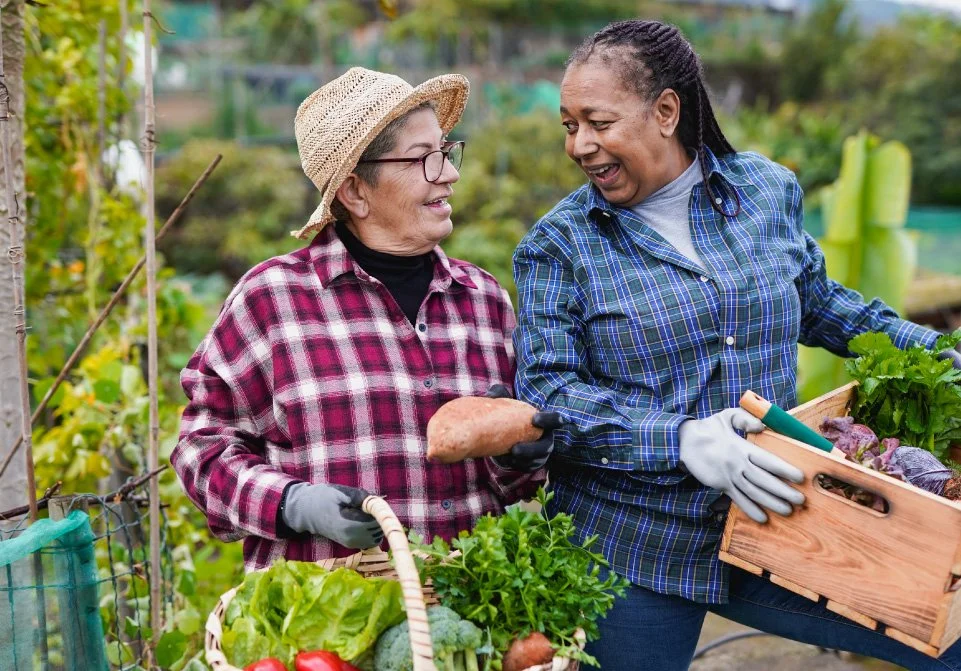
Strengthening local food systems can improve access to fresh food while supporting growers, local economies, and stronger community connections.
As communities plan for a changing climate, stronger local food systems can improve access to fresh, healthy food, diversify food sources, support local growers and businesses, and strengthen the networks people depend on every day. Sustainable and regenerative growing practices can build healthier soils and ecosystems. Producing food closer to home can deepen connections between communities and the people and places that feed them.
Together, these efforts help cultivate the conditions that allow communities and ecosystems to thrive over time.
Food Access as a Foundation for Resilience
For the City of Birmingham, Alabama, strengthening the local food system begins with a pressing challenge: access.
Nearly 70 percent of Birmingham residents live in neighborhoods with limited access to affordable, healthy food. Transportation barriers and decades of disinvestment compound the challenge, while traditional grocery retail remains absent or unstable in many areas.
Blue Strike Environmental recently partnered with the City through its USDA-funded Urban Agriculture and Innovative Production initiative to explore how Birmingham can expand access to fresh food while supporting a stronger network of local producers, farms, gardens, and markets.
Through a comprehensive Farmers Market Study, Blue Strike combined stakeholder and producer engagement, market research, and GIS spatial analysis to understand Birmingham’s existing food landscape and identify opportunities to strengthen it.
The findings point toward a diverse approach. Farmers markets have an important role alongside mobile markets, pop-ups, farm stands, community-supported agriculture, cooperatives, urban farms, community gardens, and other neighborhood-scale models. Different neighborhoods have different needs, and a healthy local food system benefits from multiple ways for fresh food to reach people.
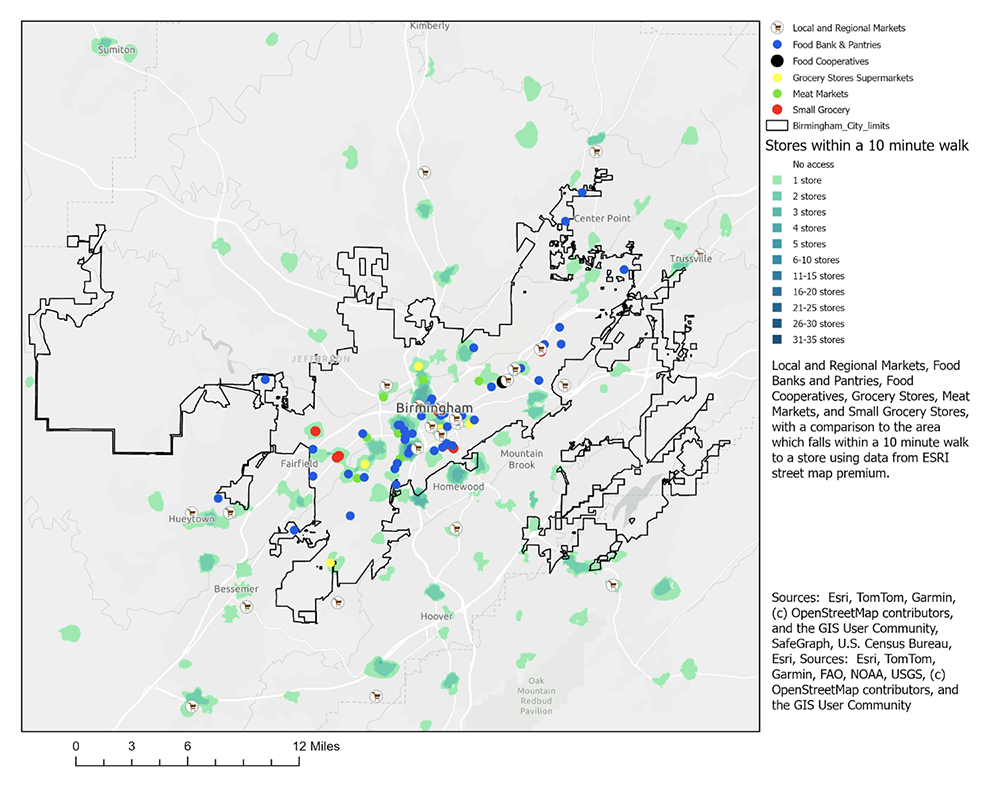
Blue Strike mapped grocery access alongside Birmingham's growing network of markets, gardens, producers, and other food assets to identify gaps and opportunities for investment.
This is especially important in Birmingham. Blue Strike’s spatial analysis found that large portions of northern, western, and southeastern Birmingham remain outside a ten-minute walk of a grocery store. More than 30 neighborhoods had no documented gardens, farmers markets, small groceries, or food cooperatives identified through the study.
Mapping these conditions reveals both gaps and opportunities: where existing assets can be strengthened, where new resources may have the greatest impact, and how investments can better connect people with fresh food.
Growing Food, Growing Community
Improving access goes hand in hand with growing more food locally and strengthening the people and places that produce it.
Birmingham has a growing ecosystem of urban and regional farms, community gardens, growers, markets, and food organizations. Supporting that ecosystem means helping producers find viable markets, connecting growers with land and resources, and creating more opportunities for locally grown food to reach Birmingham neighborhoods.
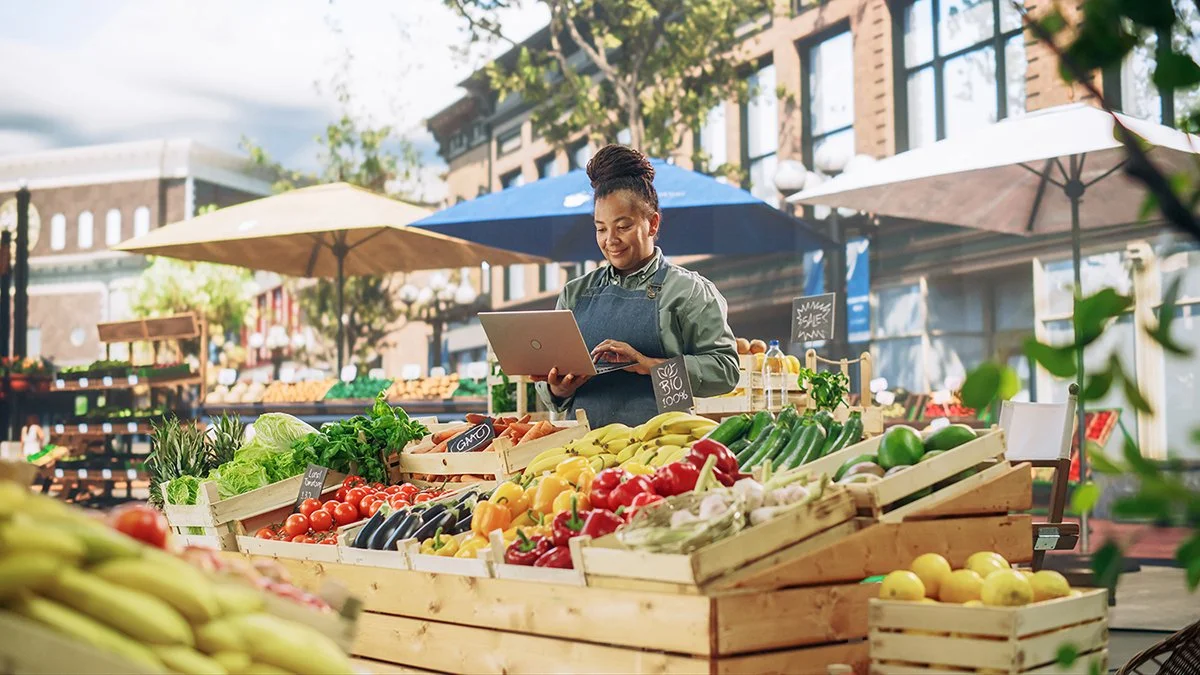
Urban farms, community gardens, and local growers can increase fresh food production while strengthening food knowledge, neighborhood connections, and stewardship of land.
Producer engagement conducted through the study underscored the importance of economic viability. Farmers need reliable customers and market opportunities that make sense for their businesses. Residents need food that is accessible and affordable. Tools such as SNAP/EBT, Double Up Food Bucks, coordinated marketing, shared market resources, and stronger producer networks can help build those connections.
Community gardens add another dimension, creating opportunities to grow food close to home while building food literacy, sharing knowledge, strengthening neighborhood relationships, and reconnecting people with the process of cultivation.
Together, these elements form a more connected local food system, where food access, local agriculture, community health, economic opportunity, and stewardship of land reinforce one another.
The climate connection runs through this entire system. Food depends on healthy soil, reliable water, viable farms, transportation, energy, and functioning natural systems, all of which face increasing pressures from a changing climate. Strong local and regional networks add diversity and adaptability, while sustainable growing practices can support soil health, water conservation, biodiversity, and other ecosystem benefits.
Food also offers a tangible example of circularity and regeneration. Nutrients begin in the soil, become food, nourish people, and can return to the land through composting and other regenerative practices. Regenerative food systems sequester carbon, improve water holding capacity, increase overall soil health, and help replenish the natural resources on which future harvests depend.
Mapping a Stronger Local Food System
Understanding these relationships requires looking at the food system as a whole.
For Birmingham, Blue Strike compiled community and stakeholder input with GIS data on farmers markets, food hubs, producer cooperatives, mobile markets, grocery and corner stores, local and regional producers, community gardens, and social, economic, demographic, and environmental conditions.
The analysis revealed a fragmented food landscape with significant opportunities to better connect existing resources and strategically grow new ones.
The maps help Birmingham ask more informed questions: Where are residents facing the greatest barriers to fresh food? Where are farms, gardens, markets, and other local assets already taking root? Where could successful models be expanded, replicated and enhanced? Where can new market models succeed? What support do growers need? How can investments strengthen food access and the local producers who make a more resilient system possible?
Birmingham’s resulting strategic roadmap and implementation tools help translate those questions into action. The project includes tools for evaluating strategies and market models across factors such as equity, feasibility, impact, and resources, along with GIS maps and a Market Tracker to support continued implementation.
Alongside the Farmers Market Study, Blue Strike worked with Birmingham to develop public-facing Grow Birmingham resources designed to make the City's growing food ecosystem easier to navigate.
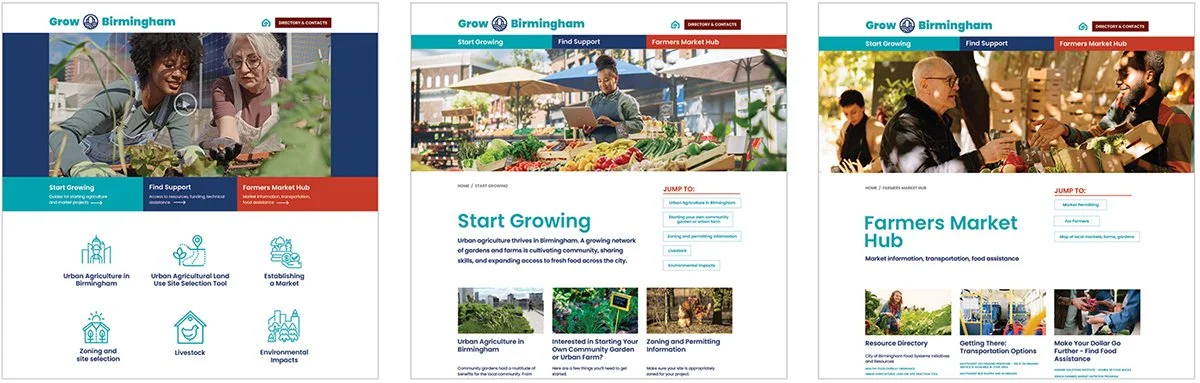
Grow Birmingham translates food-system planning into accessible resources for residents and producers, from starting a garden or farm to finding technical assistance, funding, markets, and fresh food.
The Grow Birmingham website organizes information around three simple pathways: Start Growing, Find Support, and Farmers Market Hub. These resources connect people with information about starting gardens and urban farms, zoning and permitting, potential growing sites, land and water, funding and technical assistance, local markets, transportation, and food-assistance programs.
Cultivating Resilience
Birmingham’s experience reflects a larger opportunity for communities considering how food fits within climate and resilience planning.
The starting point will vary from place to place. In communities with significant food-access gaps, the priority may be creating reliable pathways to fresh, healthy food. Agricultural communities may focus on sustaining local producers, preserving working lands, or connecting nearby farms more directly with residents. Others may look to urban agriculture, community gardens, soil health, composting, food recovery, or stronger regional food networks.
Across these approaches runs a common thread: nourishing the relationships among people, food, land, and community.
Healthy local food systems are cultivated over time through investments in farmers and gardens, better access to fresh food, stronger connections between producers and consumers, thoughtful stewardship of land and water, and practices that replenish the resources on which communities depend.
These same qualities help communities become more resilient: strong relationships, diverse local resources, healthy ecosystems, and the capacity to adapt as conditions change.
As climate planning continues to evolve, food systems offer a powerful way to connect environmental goals with everyday community needs. The work begins close to home, with the people, places, and natural systems that nourish a community today and can help sustain it for generations to come.